
Outsourcing Market Research: Benefits and Use Cases
Outsourcing market research helps businesses access expert analysis, faster execution, and scalable support without building an in-house research team. This guide explains the key benefits and common use cases.

Overview
What Is Outsourced Market Research?
- Research design and methodology
- Data collection through surveys, interviews, and panels
- Market sizing and segmentation
- Competitive analysis
- Data analysis and interpretation
- Insight reporting and recommendations
These providers operate as an extension of your team. They bring structure, objectivity, and experience across multiple industries and markets. For many organizations, this model offers depth without overhead.
Key Benefits of Outsourced Market Research
- Speed and Scale: External teams are built to execute quickly. They already have tools, panels, and workflows in place, allowing projects to launch in days rather than months. This speed is especially valuable when timing matters, such as before a product launch or investment decision.
- Access to Expertise: Market research requires more than asking questions. It demands careful design, bias control, and statistical rigor. Outsourced market research gives you access to professionals who do this every day. Their experience improves data quality and reduces costly misinterpretation.
- Cost Efficiency: Building an in-house research function requires hiring, training, and tooling. For many companies, that investment is difficult to justify for intermittent needs. Outsourcing converts fixed cost into variable cost. You pay only when research is needed.
- Objectivity: Internal teams can be influenced by company narratives or stakeholder expectations. External researchers bring a neutral perspective that often surfaces uncomfortable but valuable truths. This independence strengthens strategic decisions.
- Focus for Core Teams: By offloading execution, internal teams can focus on using insights rather than gathering data. Strategy, product, and leadership remain focused on action.
Common Use Cases
- Product Development: Identifying unmet customer needs, testing concepts and features, and validating product-market fit.
- Market Entry: Sizing new geographies or segments, understanding local buyer behavior, and assessing competitive dynamics.
- Brand and Positioning: Measuring awareness and perception, testing messaging and value propositions, and refining go-to-market strategy.
- Investment and Strategy: Market sizing for fundraising, due diligence support, and trend analysis and scenario planning.
- Customer Experience: Satisfaction and loyalty tracking, journey mapping, and churn and retention analysis.
In each case, the goal is the same: reduce uncertainty before committing resources.
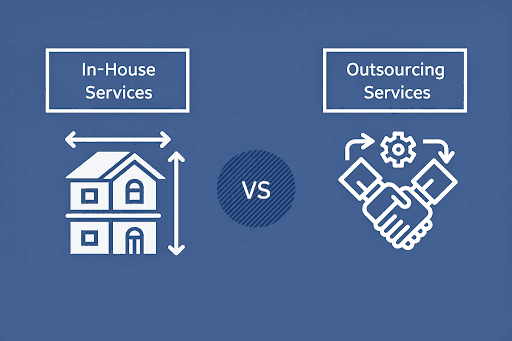
In-House vs Outsourced Market Research
| Area | In-House Market Research | Outsourced Market Research |
|---|---|---|
| Cost Structure | Fixed salaries and tools | Variable, project-based |
| Speed | Slower to ramp | Fast to launch |
| Expertise | Limited to team skillset | Access to specialized talent |
| Objectivity | Can be shaped by internal views | Independent perspective |
| Scalability | Constrained by headcount | Scales on demand |
In-house market research works well for companies with continuous, high-volume research needs and the budget to support a dedicated team. It offers deep institutional knowledge and long-term continuity.
Outsourced market research is better suited for organizations that need flexibility, speed, and specialized expertise. It allows teams to access advanced methods and global reach without long-term commitment.
For many businesses, the optimal model is hybrid. Core strategy remains internal, while execution-heavy or specialized projects are handled through outsourced market research partners. This balance delivers both control and efficiency.
When Outsourcing Makes the Most Sense
- You need insight quickly
- Internal bandwidth is limited
- Decisions carry high financial risk
- You lack specialized research skills
- You want an independent perspective
For startups, it provides credibility and structure. For enterprises, it adds capacity and flexibility.